Overview
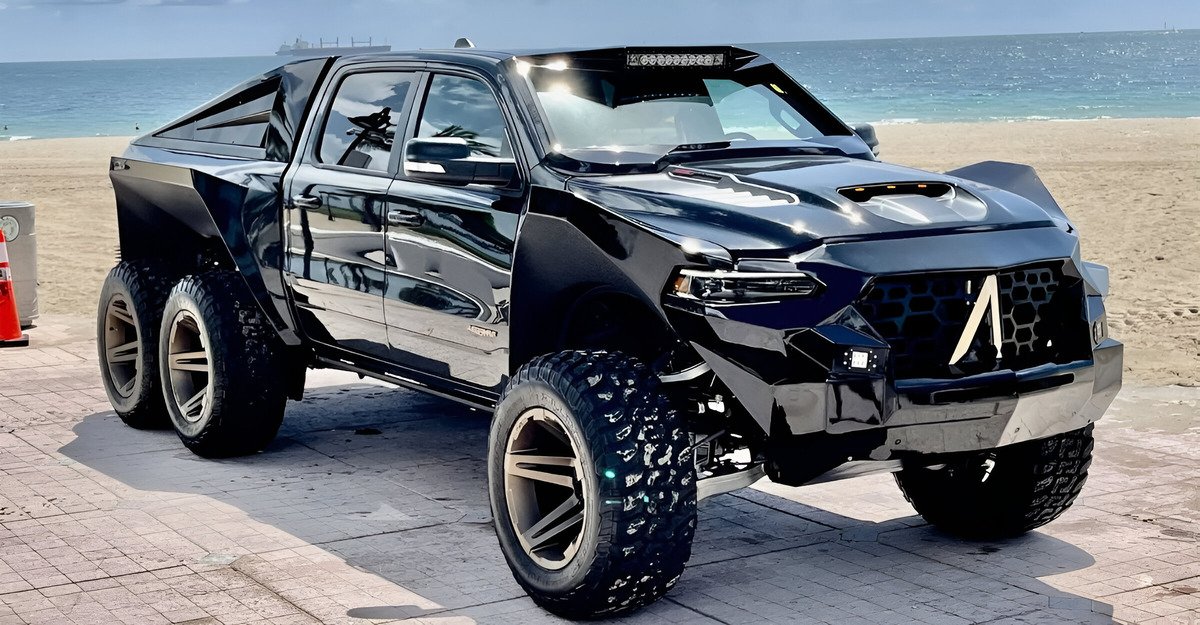
Apocalypse 6×6 has pulled the curtain back on what could become the most talked‑about truck of the mid‑2020s: the Juggernaut. Built on the foundation of the Ram 1500 TRX, the concept adds two extra wheels and a host of performance upgrades that aim to turn an already aggressive pickup into a true off‑road monster. While the company has hinted at an early‑2026 launch, official specifications are still scarce, so the following rundown compiles everything that has been confirmed, teased, or inferred from prototypes that have appeared at recent shows.
Exterior Design
The Juggernaut immediately distinguishes itself with a stretched chassis that accommodates a third rear axle. The overall silhouette is more angular than the stock TRX, featuring sharp fender flares, a reinforced steel front bumper, and a cyber‑truck‑inspired bed cap that can be locked shut for extreme payloads. Heavy‑duty side steps double as climbing rails, and the rear overhang is reinforced with a custom steel subframe that appears capable of withstanding impacts from trailers or even light armored vehicles. Side mirrors are replaced with camera‑based “smart mirrors” that feed a 1080p view to the dashboard display, reducing blind spots during low‑speed maneuvers.

Powertrain and Performance
Under the hood the Juggernaut retains the 6.2‑liter supercharged HEMI V8 found in the TRX, but Apocalypse engineers have tuned it to push roughly 850 hp and 950 lb‑ft of torque. The power boost comes from larger fuel injectors, a revised camshaft profile, and a high‑strength steel crankshaft. Power is routed to all six wheels via a full‑time 6×6 transfer case with a 2.5:1 low‑range gear set, allowing the truck to maintain traction on loose surfaces while still delivering 0‑60 mph figures in the low‑four‑second range—impressive given the added mass of the extra axle and reinforced frame.
Off‑Road Capability
The Juggernaut’s off‑road pedigree is backed by a suite of selectable drive modes: Baja, Mud, Rocks, Drag, and Sport. Each mode adjusts throttle response, torque split, and suspension damping. The front suspension uses independent double‑wishbone arms with 14 inches of travel, while the two rear axles each sit on Dana 60 solid axles with locking differentials. A high‑flow radiator, oil cooler, and supplemental transmission cooler keep operating temperatures in check during extended climbs. The integrated winch, rated at 14,000 lb, is mounted behind the front bumper and can be controlled from the infotainment screen.

Cabin and Technology
Inside, the Juggernaut abandons the cramped “truck‑cab” feel in favor of a spacious cabin that can accommodate drivers up to 7 ft tall without compromising comfort. Seats are upholstered in perforated leather with both heating and cooling functions, and they feature power‑adjustable lumbar support. A 12‑inch touchscreen sits atop the dash, running the latest Uconnect system with wireless Apple CarPlay and Android Auto. Audio is delivered through a Harman Kardon 12‑speaker surround system, while a digital rear‑view camera with 360‑degree overlay assists in tight parking situations. Ambient lighting can be customized in three zones, and a panoramic roof offers an unobstructed view of the sky—useful for navigation when GPS signals are weak.
Pricing and Value
Apocalypse has listed a starting price of $297,999 for the Juggernaut. The figure includes the donor TRX chassis, the extra axle assembly, powertrain upgrades, and a five‑year/100,000‑mile warranty. For comparison, a stock TRX starts around $105,000, while the company’s previous 6×6 offering, the “Warlord,” was priced near $250,000. The higher price tag reflects the extensive engineering required to safely integrate the third axle, the bespoke suspension components, and the luxury‑grade interior appointments. While the cost may be prohibitive for most consumers, enthusiasts seeking a vehicle that can tackle desert races, rally‑cross events, or extreme off‑road expeditions may find the investment justifiable.
Final Thoughts
If the Juggernaut lives up to the prototype footage, it could set a new benchmark for multi‑axle performance trucks. Its combination of raw power, six‑wheel traction, and a relatively comfortable interior blurs the line between a utility vehicle and a purpose‑built off‑road racer. However, potential buyers should keep an eye on the final production specifications, especially regarding fuel economy, emissions compliance, and real‑world durability of the added rear axle. Until official testing data emerges, the Juggernaut remains a tantalizing glimpse of what could become the definitive “monster truck” for the road‑legal market.
Frequently Asked Questions
1. Will the Juggernaut be available with a diesel engine?
Apocalypse has only confirmed a gasoline‑powered 6.2 L supercharged HEMI for the initial launch. A diesel variant has not been announced, though the company has left the door open for future power‑train options.

2. How much payload can the Juggernaut carry?
Official figures are pending, but the reinforced frame and dual rear axles suggest a payload capacity between 7,000 lb and 9,000 lb, depending on the chosen configuration.
3. What is the expected fuel economy?
Given the large V8 and six‑wheel drivetrain, EPA estimates are likely to be low—around 8 mpg city and 12 mpg highway. Real‑world numbers will vary based on driving mode and terrain.

4. Are there any off‑road accessories planned?
Apocalypse has hinted at a line of optional accessories, including snorkel intake kits, rock sliders, upgraded winches, and a detachable utility box that can be mounted on the rear deck.
5. When and where will the first deliveries take place?
The company targets early 2026 for the first deliveries, with the initial rollout expected at select Apocalypse dealer locations in the United States. International availability has not yet been confirmed.

Disclaimer
The information presented here is based on publicly available teasers, prototype images, and statements from Apocalypse 6×6. Specifications, pricing, and availability are subject to change until the manufacturer releases official data. This article does not constitute an endorsement or a guarantee of any kind.