Overview
Kia’s entry into the midsize pickup arena arrives with the 2025 Tasman, the brand’s first purpose‑built truck. Positioned as a work‑ready yet lifestyle‑friendly vehicle, the Tasman offers a blend of unconventional styling, a capable off‑road chassis, and a suite of practical amenities aimed at fleet operators, adventure lovers, and families who need a robust hauler. Pricing in the United States starts at $42,990 for the base S model and climbs to $71,590 for the top‑end X‑Pro trim before destination charges. In India the ex‑showroom price translates to roughly ₹36 lakh‑₹60 lakh, depending on the specification. The truck can tow up to 3,500 kg, features a double‑cab layout with ample rear-seat space, and competes directly with the Ford Ranger, Toyota Hilux, and Isuzu D‑Max.
Design and Dimensions
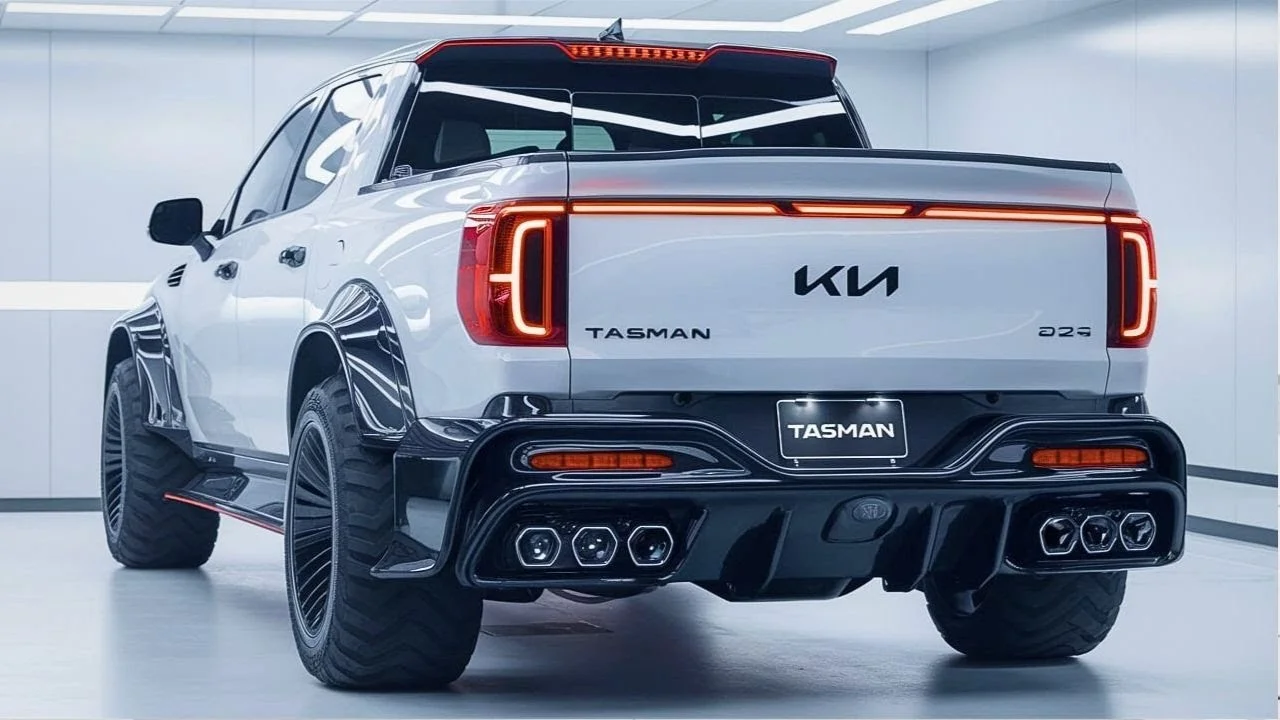
The Tasman adopts a sharply angular silhouette that makes a strong visual statement on the road. A massive “tiger‑nose” grille dominates the front fascia, while vertically stacked LED headlamps and a C‑shaped DRL strip lend modernity to the otherwise utilitarian appearance. The body measures 5,365 mm in overall length, 1,815 mm in width, and 1,790 mm in height, sitting on a 3,120 mm wheelbase that provides a stable platform for both towing and passenger comfort.

At a curb weight of roughly 2,000‑2,200 kg, the Tasman clears the ground by 235 mm, which is generous for a midsize pickup and useful for navigating uneven terrain. Wheel options range from 17‑inch steel rims on entry‑level versions to 18‑inch alloy designs on higher trims, all wrapped in all‑terrain, tubeless tires. Exterior colour choices include a pristine White Diamond, a subdued Graphite Gray Metallic, and a bold Yamabuki Orange, catering to both corporate fleets and individual buyers who prefer a splash of personality.
The cargo bed measures 1,545 mm in length and can accommodate a payload of up to 1,000 kg. Optional tie‑down points and a configurable load‑bed floor make it easy to secure tools, sporting gear, or construction materials. A fold‑down tailgate with a built‑in step further enhances accessibility.

Interior Technology
Step inside, and the Tasman reveals a cockpit that aligns with Kia’s contemporary design language. The dashboard houses a 12.3‑inch fully digital instrument cluster paired with an equally sized 12.3‑inch central touchscreen. A smaller 5‑inch secondary display controls the climate system, allowing quick adjustments without diverting attention from the road.
Connectivity is handled through wireless Android Auto and Apple CarPlay, removing the need for cables while delivering navigation, music, and messaging functions. The base S trim offers a 10.25‑inch screen instead of the larger unit, but retains the core infotainment capabilities. Seats are upholstered in durable cloth fabric on lower trims, with optional leather and ventilated front seats on the X‑Pro variant. Manual air‑conditioning is standard, while automatic climate control becomes available from the X‑Line upwards.

Physical controls for audio, phone, and cruise control are ergonomically placed on the steering wheel, minimizing driver distraction. The interior layout emphasizes practicality: ample legroom for rear passengers, generous headroom, and a large centre console with storage compartments.
Powertrain and Performance
Under the bonnet sits a 2.2 litre CRDi turbo‑diesel engine that develops 154 kW (207 hp) at 3,500 rpm and delivers a robust 440 Nm of torque between 1,500 rpm and 2,500 rpm. The powerplant is mated to an eight‑speed automatic gearbox, which can be set to rear‑wheel drive for lighter loads or engaged in a full 4‑wheel‑drive configuration via Kia’s Super Select 4WD‑II system on the X‑Line and higher trims.

Torque is abundant enough to haul a maximum trailer weight of 3,500 kg, and the engine’s fuel consumption figures sit at 7.4‑7.7 L/100 km (approximately 13‑13.5 km/l) under ideal test conditions. Real‑world mixed‑use scenarios typically yield 10‑12 km/l, which is respectable for a vehicle of this size and capability. Acceleration from 0‑100 km/h takes roughly nine seconds, and the top speed is limited to 170 km/h.
A 75‑litre fuel tank grants a theoretical range of 700‑850 km before refuelling is required. The suspension uses coil springs front and rear, providing a balance between comfort on highways and articulation during off‑road excursions. Drivers can select from several terrain‑specific driving modes—including Desert, Mud, Snow, and Rock—to optimise throttle response, transmission shift points, and traction control for the conditions at hand.

Off‑Road Capability
The Tasman’s off‑road credentials stem from a mix of mechanical and electronic aids. The 235 mm ground clearance, coupled with a robust ladder‑type frame, enables the truck to navigate deep ruts and uneven surfaces without compromising stability. The Super Select 4WD‑II system offers a “locked” centre differential for challenging low‑traction environments, while the rear differential lock (available on X‑Line and above) ensures power is evenly distributed to both rear wheels.
Electronic aids include hill‑descent control, which modulates braking to maintain a steady speed on steep declines, and a rear‑view camera with dynamic guidelines that assists in maneuvering the sizeable cargo bed in tight spots. Higher trims receive a 360‑degree surround‑view system, stitching together feeds from multiple cameras for a bird’s‑eye perspective.

Safety and Driver Assistance
Safety is a strong focus for the Tasman, which earned a 5‑star ANCAP rating. The vehicle comes equipped with up to seven airbags, including front, side, curtain, and knee airbags for the driver. Braking is managed by an ABS system with electronic brake‑force distribution (EBD) and brake‑assist, while stability control (ESC) helps keep the vehicle upright during sudden maneuvers.
Kia Drive Wise, the brand’s suite of advanced driver‑assist systems (ADAS), bundles adaptive cruise control, lane‑keep assist, forward‑collision warning with automatic emergency braking, and blind‑spot monitoring. Hill‑start assist prevents rollback on inclines, and a rear cross‑traffic alert warns of approaching vehicles when reversing. All these features work together to create a protective cocoon for both commercial users and families.

Fuel Efficiency and Running Costs
With a 75‑litre tank, the Tasman can comfortably cover 700‑850 km in mixed‑city and highway duty before refuelling. In practice, owners report a fuel cost of roughly ₹9‑₹11 per kilometre when operating in Indian conditions, which translates to a monthly running expense of about ₹27,000‑₹33,000 for 3,000 km of travel. The diesel engine’s low internal friction and efficient turbocharging contribute to these modest figures.
Maintenance is positioned as straightforward, with Kia recommending service intervals of 10,000 km or 12 months, whichever comes first. Annual service costs typically range between $500‑$800 (≈ ₹40,000‑₹65,000), depending on the chosen garage and any wear‑and‑tear items. The brand backs the Tasman with a 5‑year/100,000‑mile warranty, covering powertrain and essential components, which helps keep ownership costs predictable.

Connectivity and Convenience Features
Lighting is handled by full‑LED headlamps with auto‑high‑beam functionality, while LED daytime running lights improve visibility in daytime traffic. Inside the cabin, USB‑A and USB‑C ports are spread across the front and rear rows, allowing passengers to charge devices on the go. Wireless charging pads are standard on the X‑Pro trim, and a keyless entry system with push‑button start eliminates the need for a traditional key.
Audio enthusiasts will appreciate the eight‑speaker Harman Kardon sound system, delivering clear and balanced audio throughout the cabin. Bluetooth connectivity, auxiliary input, and a high‑resolution media player are all supported. On‑board Wi‑Fi hotspot capability is optional, enabling passengers to stay connected during long journeys.

Additional conveniences include a power‑operated tailgate, which can be opened or closed with the push of a button, and a programmable X‑Trek mode that adjusts steering response and suspension firmness for rugged excursions. The Kia Connect app integrates with the vehicle, offering remote start, lock/unlock, vehicle status monitoring, and geofencing alerts.
Pricing, Availability and Ownership Costs
The Tasman’s price ladder begins at $42,990 for the base S specification and tops out at $71,590 for the fully equipped X‑Pro. In India, after adding GST, registration, and dealer handling, the on‑road price ranges between ₹48 lakh and ₹80 lakh. The truck made its debut in the Australian market in mid‑2025 and is slated for launch in additional territories—including India, Southeast Asia, and selected European countries—throughout the remainder of the year.

Dealer‑level promotions have seen discounts of up to $2,000 in certain regions, particularly for fleet purchases. Kia offers a standard 5‑year/100,000‑mile warranty, with an optional extended‑coverage plan that adds roadside assistance and paint protection for an additional fee. Expected delivery times are currently estimated at 1‑2 months from order placement, though supply‑chain fluctuations could affect this window.
Owner Impressions and Known Issues
Early owners consistently highlight the diesel engine’s strong low‑end torque, which makes hauling heavy loads feel effortless. The spacious double‑cab layout is praised for its comfort during long drives, and the array of safety technologies contributes to a sense of confidence on both highways and rough tracks. Reviewers have also noted the 235 mm ground clearance as a real advantage in regions that experience occasional snowfall or unpaved roads.
Critiques centre on the eight‑speed automatic transmission, which some drivers describe as prone to occasional harsh downshifts, especially when descending steep grades. The third‑row seat (available as an optional extension on certain trims) is deemed suitable for children but cramped for adult passengers. Additionally, the absence of a hybrid or mild‑hybrid powertrain positions the Tasman behind some rivals that are beginning to offer electrified options.
Competitor Landscape
Within the $43,000‑$72,000 midsize pickup segment, the Tasman stands out for its generous standard equipment list and Kia’s extensive dealer network. When compared to the Toyota Hilux, the Tasman offers a larger digital cockpit and a more aggressive exterior design, though the Hilux retains a slight edge in resale value and fuel economy. Against the Ford Ranger, Kia’s interior material quality and infotainment responsiveness are often rated higher, while the Ranger’s refined ride quality and broader engine lineup give it an advantage on paved roads.
The Isuzu D‑Max matches the Tasman in towing capability and payload, but Kia’s suite of ADAS features and the optional Harman Kardon audio system provide a more upscale feel. For buyers who prioritize off‑road prowess, the Tasman’s Super Select 4WD‑II and multiple terrain modes place it favourably against most competition, especially when paired with its competitive pricing.
Final Verdict
The 2025 Kia Tasman arrives as a well‑rounded midsize pickup that successfully blends work‑horse utility with contemporary comfort and technology. Its 2.2‑litre turbo‑diesel delivers ample torque for demanding towing tasks, while the eight‑speed automatic and selectable 4WD system keep the vehicle responsive across a range of surfaces. Interior quality, driver‑assist features, and connectivity options are thorough for the segment, appealing to both commercial fleets and lifestyle buyers.
While the transmission may feel a touch abrupt under heavy braking and the lack of an electrified powertrain could deter eco‑conscious customers, the overall package is compelling. Kia’s five‑year warranty and reputation for reliable after‑sales support further sweeten the deal. For anyone seeking a capable, well‑equipped midsize truck without the premium price tag of some competitors, the Tasman presents a persuasive option.
Frequently Asked Questions
What is the maximum towing capacity of the Kia Tasman?
The vehicle is rated to tow up to 3,500 kg when equipped with the Super Select 4WD‑II system and the appropriate towing package.Does the Tasman offer a rear‑view camera on all trims?
A basic rear‑view camera with guidelines is standard on every model. A 360‑degree surround‑view system is available from the SX+ trim onward.Can I get a hybrid version of the Tasman?
As of the 2025 model year, Kia has not released a hybrid or plug‑in hybrid variant of the Tasman. Diesel remains the sole powertrain option.How many airbags are installed in the vehicle?
The Tasman features up to seven airbags, including front, side, curtain, and driver‑knee airbags, depending on the selected trim.What warranty coverage does Kia provide?
Kia offers a standard 5‑year/100,000‑mile warranty covering the powertrain and essential components, with optional extended‑coverage plans also available.
Disclaimer
The information presented above is based on publicly available specifications, press releases, and early‑owner feedback as of November 2025. Prices, features, and availability may vary by market and are subject to change without notice. Prospective buyers should verify details with an authorized Kia dealership before making a purchase decision.