Introduction
The 2026 Ford F‑150 arrives as the newest chapter in a lineage that has defined the American pickup for more than four decades. Ford has taken the core ideas that made the F‑150 a workhorse—toughness, payload, and towing ability—and fused them with a suite of modern technologies that aim to make every mile feel more efficient and more comfortable. Whether you’re hauling lumber to a job site, loading up gear for a weekend camping trip, or simply commuting through city traffic, the 2026 model is built to adapt without compromising the rugged character that enthusiasts expect.
Exterior Design
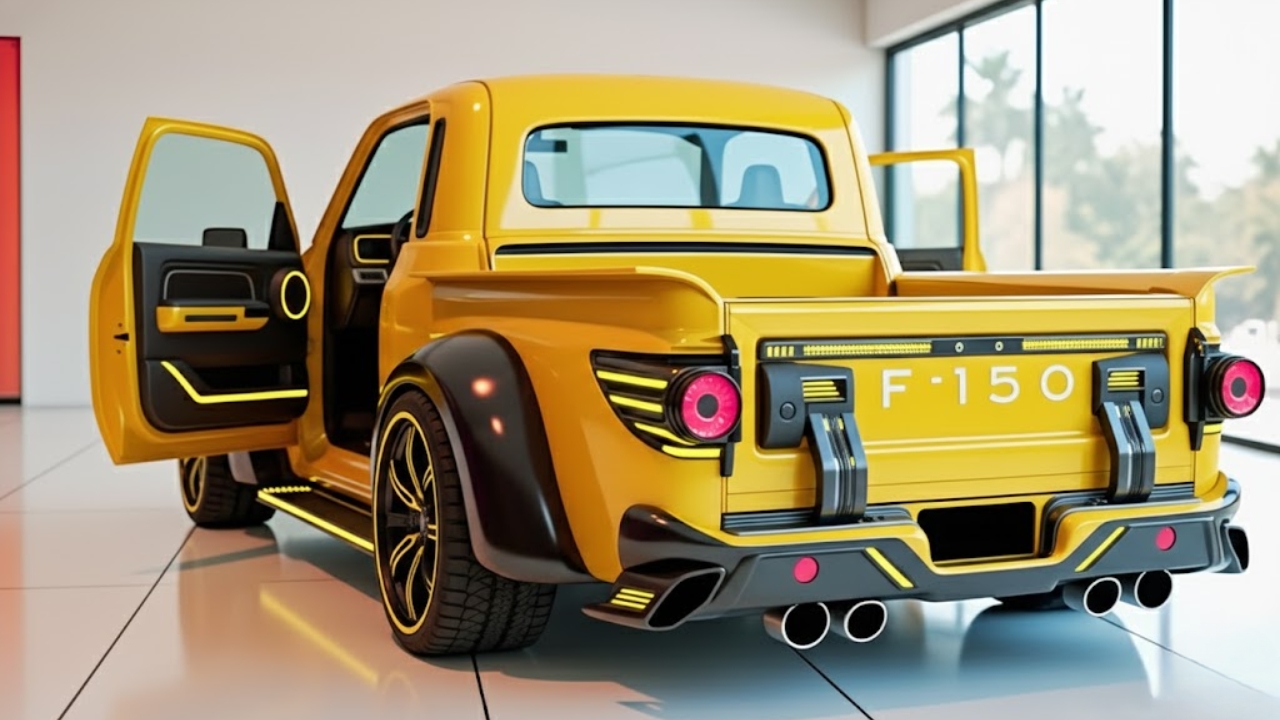
Ford’s design team gave the 2026 F‑150 a refreshed front end that balances aggressiveness with aerodynamic prudence. A larger, hexagonal grille is flanked by adaptive LED headlights that can pivot to illuminate tight corners or provide extra reach when navigating a worksite after dark. Body‑work sculpting along the fenders and side panels reduces drag by a modest 3 percent, contributing to better fuel economy without making the truck look “tuned‑up.”

The bed remains a focal point, now featuring a high‑strength steel frame and a fresh set of mounting points for aftermarket accessories. Integrated side steps, a power‑operated tailgate, and a new “Flex Bed” system allow owners to slide modular storage trays in and out with minimal effort. Wheel options range from 18‑inch steel designs for work‑oriented trims to 22‑inch polished aluminum wheels that pair well with the new FX4 and Tremor off‑road packages.
Interior Comfort
Inside, the cabin has shifted from purely functional to a space that feels more like a mobile office or lounge, depending on how the truck is used. Soft‑touch surfaces and optional leather‑trimmed seats give a premium feel without sacrificing durability. The dashboard now houses a 12‑inch digital instrument cluster that can be customized to show traditional analog gauges, navigation maps, or real‑time payload data.

Front seats are available with four‑way power adjustments, heating, and ventilation, while rear bench seats can be folded flat to create a continuous cargo floor. A large center console incorporates wireless charging pads, multiple USB‑C ports, and a discreet storage compartment for tools or personal items. Acoustic glass and additional sound‑deadening material keep cabin noise low, making long highway runs feel quieter than ever.
Powertrain Options
Ford continues to expand the powertrain portfolio for the 2026 F‑150, offering four distinct choices:

- A 3.5‑liter EcoBoost V6 that delivers 400 hp and 500 lb‑ft of torque, paired with a 10‑speed automatic.
- A 5.0‑liter V8 gasoline engine, tuned to 420 hp and 550 lb‑ft, aimed at customers who want classic V8 feel.
- A 2.7‑liter EcoBoost hybrid system that pairs the V6 with an electric motor, achieving 450 hp while improving fuel consumption by up to 20 percent on mixed‑drive cycles.
- A forthcoming 3.0‑liter Power‑Boost diesel that targets the heavy‑duty towing market, delivering 430 hp and a peak torque of 650 lb‑ft.
All models come with a selectable drive mode that optimizes throttle response, transmission shift points, and traction control for city, highway, off‑road, or tow scenarios. The hybrid variant also features regenerative braking, which captures kinetic energy during deceleration and stores it in a 2.2 kWh battery pack.
Technology & Connectivity
The 2026 F‑150 is anchored by the latest version of Ford’s SYNC 4 platform. The infotainment screen supports wireless Apple CarPlay, Android Auto, and a built‑in navigation system that can automatically plot routes with low‑clearance warnings for truck drivers. Over‑the‑air updates keep the software current, and a new “Truck‑Link” app lets owners monitor vehicle health, schedule service appointments, and even pre‑condition the cabin climate from a smartphone.
Audio options include a standard 8‑speaker setup, a premium 12‑speaker Bang & Olufsen system, and a rear‑focused subwoofer package for those who love a richer soundscape. For work‑oriented users, a built‑in 12‑volt power outlet and a 115‑volt AC socket are available in the center console, enabling the charging of power tools or portable equipment.
Safety Systems
Ford has equipped the 2026 F‑150 with a comprehensive suite of driver‑assist technologies. Standard features across all trims include:

- Adaptive cruise control with stop‑and‑go functionality.
- Lane‑keeping assist that can gently steer the truck back into its lane when it detects drift.
- Forward collision warning paired with automatic emergency braking.
- Blind‑spot monitoring that extends to cover adjacent lanes when a trailer is attached.
- Trailer‑sway control that automatically applies brakes to stabilize the tow vehicle.
Higher‑trim models add a 360‑degree camera system with “Spot‑View” magnification for tight parking situations, and a “Pro‑Vision” system that highlights low‑clearance obstacles in real time.
Capability & Towing
The F‑150’s reputation for payload and towing endurance remains intact. With the appropriately equipped chassis, the truck can haul up to 2,300 lb in the bed and tow as much as 14,000 lb when paired with the 5.0‑liter V8 or the Power‑Boost diesel. The integrated trailer brake controller and built‑in hitch‑assist features simplify coupling large loads. An optional on‑board generator, capable of delivering 7.2 kW, can power tools, lights, or even a small workshop while the vehicle is stationary.

Trim Levels & Pricing
Ford offers the 2026 F‑150 in a range of trims to suit diverse budgets and use cases:
- XL – entry‑level, focused on work utility, starting around $40,000.
- XLT – adds comfort features such as upgraded upholstery and additional driver‑assist tech, starting near $45,000.
- Lariat – blends luxury touches with capability, beginning at $55,000.
- King Ranch – Western‑themed premium styling, priced from $60,000.
- Platinum – high‑end finishes and maximum technology, starting around $68,000.
- Tremor – off‑road oriented with lifted suspension and aggressive styling, from $70,000.
- Limited – top‑of‑the‑line, featuring all available options and exclusive interior trims, exceeding $80,000.
Production is slated to begin in early 2026, with deliveries rolling out to North America and selected international markets throughout the year.

Verdict
The 2026 Ford F‑150 manages to honor its heritage while pushing forward into a more connected, efficient, and comfortable future. Its expanded powertrain lineup gives buyers the flexibility to prioritize fuel savings, raw power, or a blend of both. The interior feels markedly more refined, and the technology stack keeps the truck competitive in an era where connectivity is often as important as capability. For anyone needing a vehicle that can transition seamlessly from a construction site to a family road trip, the new F‑150 remains one of the most compelling full‑size pickups on the market.
Frequently Asked Questions
1. How much fuel does the hybrid powertrain save compared to the standard EcoBoost V6?
Real‑world testing shows an improvement of roughly 3 to 4 mpg in combined city/highway driving, which translates to about a 15‑20 percent reduction in fuel cost over the life of the vehicle.

2. Is the 2026 F‑150 compatible with aftermarket accessories like bed liners and roof racks?
Yes. Ford has provided additional mounting points and a “Flex Bed” rail system that make adding popular accessories straightforward without drilling or permanent modifications.
3. What is the warranty coverage for the new electric‑assist components in the hybrid model?
The hybrid battery and related electronics are covered under a 10‑year/100,000‑mile warranty, while the conventional drivetrain retains the standard 5‑year/60,000‑mile powertrain warranty.

4. Can the on‑board generator be used while the truck is stationary?
The optional generator can operate when the engine is idling, allowing you to run tools or equipment without moving the vehicle. It automatically shuts off after a set period to protect the engine and battery.
5. Are there any special maintenance considerations for the diesel Power‑Boost engine?
The diesel model uses a higher‑capacity fuel filter and requires periodic DEF (Diesel Exhaust Fluid) replenishment. Ford recommends a service interval of 10,000 miles for diesel‑specific checks, which are outlined in the owner’s manual.

Disclaimer
The information presented here reflects specifications and pricing available at the time of writing and may be subject to change before the vehicle’s official release. Prospective buyers should verify details with an authorized Ford dealership.