The Viral 2026 Caterpillar Pickup – What’s Real and What’s Not
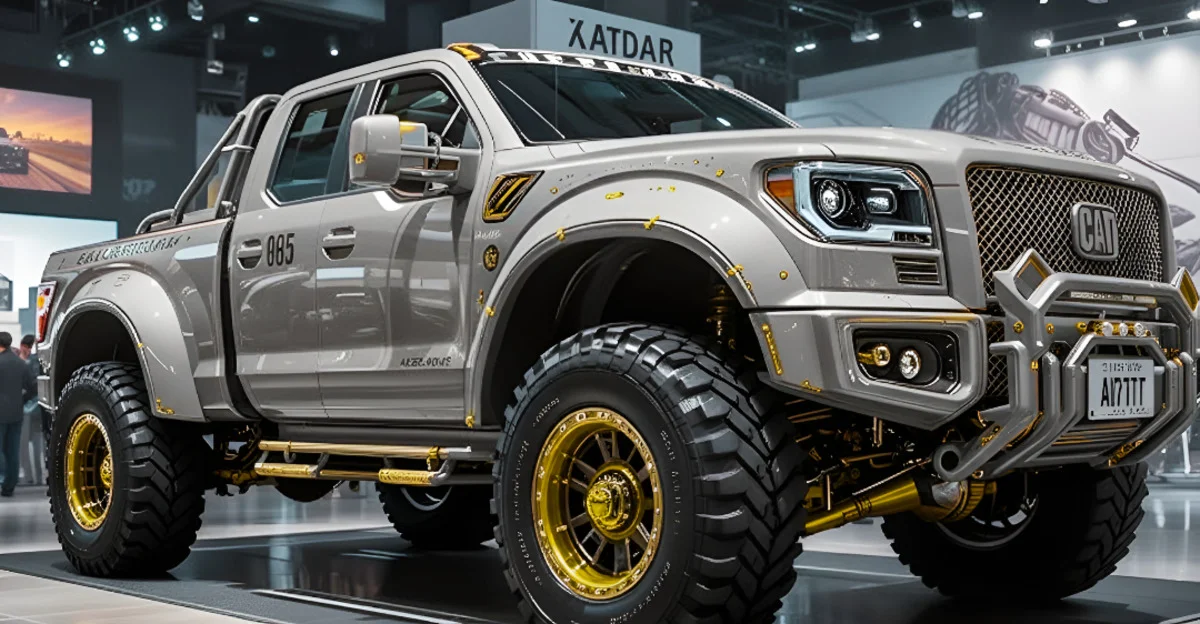
The internet has been buzzing since mid‑2024 with a striking image of a yellow‑and‑black pickup that looks as if it were built in a construction yard rather than a traditional truck plant. The “2026 Caterpillar Pickup Truck” quickly turned into a meme, a meme‑fuelled speculation, and a cautionary case study about how convincing AI‑generated imagery can fool even seasoned enthusiasts.
As of 15 October 2025 the vehicle does not exist. All the specifications, price tags, and performance claims that circulate online are derived from a series of computer‑generated renders that have been shared on YouTube, Facebook, and various automotive forums. The purpose of this article is to break down the hype, lay out the imagined features, compare the fantasy to real‑world competitors, and remind readers that the whole thing is a fabricated narrative.

Imagined Exterior Design
The concept presents a massive, boxy silhouette that borrows heavily from Caterpillar’s heavy‑equipment lineage. The front fascia is dominated by an oversized, chrome‑finished grille emblazoned with the leaping cat logo, while LED projector headlights sit under a wide, angular bonnet. The body panels are finished in a “John Deere”‑style green with bright yellow accents, though a stealth‑black variant also appears in several renders.
Measurements that appear in the viral posts describe a vehicle roughly 250 inches long, 80 inches wide, and 78 inches tall, with a stretched wheelbase to improve stability when hauling. Ground clearance is said to be 12 inches, and the wheels are 20‑inch alloys wrapped in 35‑inch all‑terrain, tubeless tires. The bed is depicted as 78 inches long with a claimed payload capacity of 2,500 lb, featuring fold‑down side walls and a lockable tailgate.

Interior Layout and Tech
Inside, the renders show a driver‑oriented cabin that feels more like a crane operator’s seat than a conventional pickup. A 12‑inch touchscreen dominates the central console, allegedly supporting Android Auto, Apple CarPlay, and a suite of telematics apps. Dual‑zone automatic climate control, heated front seats, and a leather‑trimmed steering wheel with integrated controls complete the picture.
The digital instrument cluster reportedly displays speed, fuel level, torque output, and load‑weight information in real time, a nod to Caterpillar’s focus on heavy‑duty monitoring. However, the concept does not detail trim levels, material choices for passenger seats, or storage solutions beyond the basic configuration.

Hypothetical Powertrain
The fantasy powerplant is a 6.7‑liter turbocharged diesel V8 delivering an estimated 500 hp at 2,500 rpm and a massive 1,200 lb‑ft of torque at 1,500 rpm. The drivetrain is shown as a 10‑speed automatic coupled with a 4×4 system, promising 0‑60 mph times under six seconds and a top speed surpassing 120 mph.
Fuel capacity is illustrated at 36 gallons, giving a claimed range of 400‑500 miles under mixed driving conditions. The projected fuel economy hovers around 9‑11 km per litre (approximately 20‑24 mpg), which aligns more with heavy‑duty work trucks than with a street‑legal pickup.

Safety and Driver‑Assistance Features
Even in a purely visual concept, Caterpillar’s reputation for ruggedness is echoed through a suite of imagined safety technologies. A 360‑degree camera system, adaptive cruise control, lane‑keep assist, and forward‑collision mitigation are labeled as “Caterpillar Safety.”
The design also lists up to seven airbags, anti‑lock braking with electronic brake‑force distribution, electronic stability control, and hill‑descent control. These features would be essential for a vehicle intended to navigate construction sites, mud‑filled trails, and steep grades.

Connectivity, Comfort, and Convenience
Beyond power, the renders highlight a number of creature comforts that cater to modern truck buyers:
- LED headlamps with automatic leveling.
- Multiple USB‑C ports, wireless charging pads, and a 12‑speaker audio system with Bluetooth streaming.
- Keyless entry, push‑button start, and a remote‑app that can pre‑condition the cabin.
- Power‑operated tailgate with “Pro Access” functionality, allowing the gate to stay open for loading.
- Ventilated front seats, heated rear seats, and a rear‑view camera that integrates with the infotainment screen.
Price Talk and Market Position
Because the vehicle is a hoax, there is no concrete pricing. Nevertheless, social‑media posts assign a price range of $85 000 to $120 000 (approximately ₹71 lakh to ₹1 crore). If a real‑world counterpart ever existed, that price would place it squarely in the premium segment, competing with the Ram 1500 TRX, Chevrolet Silverado ZR2, and Ford F‑150 Raptor.

The imagined Caterpillar pickup would be positioned as a niche offering for farmers, contractors, and off‑road enthusiasts who value industrial aesthetics as much as performance. In reality, Caterpillar currently produces heavy‑duty trucks and machinery, but it has not announced any plans to enter the consumer pickup market.
Public Reaction and Criticisms
The viral phenomenon attracted both admiration and skepticism. Fans praised the sheer audacity of a construction giant stepping into the pickup arena, especially the portrayal of a 12‑inch ground clearance and a torque figure that dwarfs most production trucks.

Critics, on the other hand, pointed out several red flags:
- No official press release from Caterpillar or any of its partner manufacturers.
- The lack of any safety certification or emissions data.
- “Parts scarcity” jokes that highlighted how a hypothetical vehicle built from heavy‑equipment components would be impractical to service.
- The overall visual quality of the renders, which, while impressive, showed tell‑tale signs of AI manipulation such as inconsistent reflections and oddly blended textures.
How It Stacks Up Against Real Trucks
If we compare the imagined specs with actual models, a few observations emerge:

| Feature | Imagined Caterpillar | Real‑World Counterpart |
|—|—|—|
| Engine | 6.7 L twin‑turbo diesel, 500 hp | Ford F‑150 PowerBoost (3.5 L hybrid) – 430 hp |
| Torque | 1,200 lb‑ft | Ram 1500 TRX (6.2 L V8) – 650 lb‑ft |
| Ground Clearance | 12 in | Silverado ZR2 – 11.5 in |
| Payload | 2,500 lb | F‑150 – up to 2,300 lb |
| Price (claimed) | $85‑120 k | Raptor – $73 k (base) |
Even the best production trucks cannot match the speculative torque figure, but they do offer proven reliability, dealer networks, and compliance with safety and emission regulations—things the Caterpillar concept entirely lacks.

Frequently Asked Questions
1. Is Caterpillar actually planning to build a consumer pickup?
No. As of the latest statements from Caterpillar’s corporate communications, the company’s focus remains on heavy‑equipment, construction machinery, and commercial trucks. The pickup images are AI‑generated and have never been confirmed by the brand.
2. Where did the 2026 Caterpillar Pickup design originate?
The design first appeared in a series of digitally rendered images posted on Reddit and later amplified on YouTube and Facebook. The renders were created using generative AI tools, and the accompanying specifications were fabricated by internet users for entertainment.

3. Could the described performance numbers be realistic for a diesel pickup?
While a 6.7‑liter diesel can produce high torque, achieving 1,200 lb‑ft and 500 hp in a street‑legal truck would require significant engineering, cooling, and emissions solutions that are not evident in the concept. Current production diesel pickups top out around 650‑700 lb‑ft.
4. What would be the practical challenges of a Caterpillar‑style pickup?
A vehicle built with heavy‑equipment aesthetics would likely be overly heavy, have poor fuel economy, face strict emissions testing, and suffer from limited service infrastructure. Parts would be expensive, and the vehicle’s size could make it unsuitable for everyday driving.
5. How can I avoid being misled by similar AI‑generated automotive hoaxes?
Look for official announcements from the manufacturer, check reputable automotive news outlets, and verify the source of images (original files often contain metadata). If a claim sounds too sensational, it probably is.
Final Takeaway
The “2026 Caterpillar Pickup Truck” serves as a perfect illustration of how AI‑generated visuals can capture imaginations and spread misinformation across social platforms. While the imagined beast boasts jaw‑dropping torque, a rugged exterior, and a price tag that would place it among premium performance trucks, none of these attributes exist in a real product. Until Caterpillar—or any other heavy‑equipment manufacturer—issues an official statement, the vehicle remains a digital fantasy.
For those who crave genuine power and off‑road capability, the market already offers several capable alternatives. Keep an eye on reputable sources, enjoy the creativity of concept art, but remember that not every striking image translates into a vehicle you can actually drive off the lot.
Disclaimer: The information presented in this article is based on publicly available AI‑generated content and does not reflect any official specifications or pricing from Caterpillar Inc. The vehicle described does not exist as a production model as of the publication date.