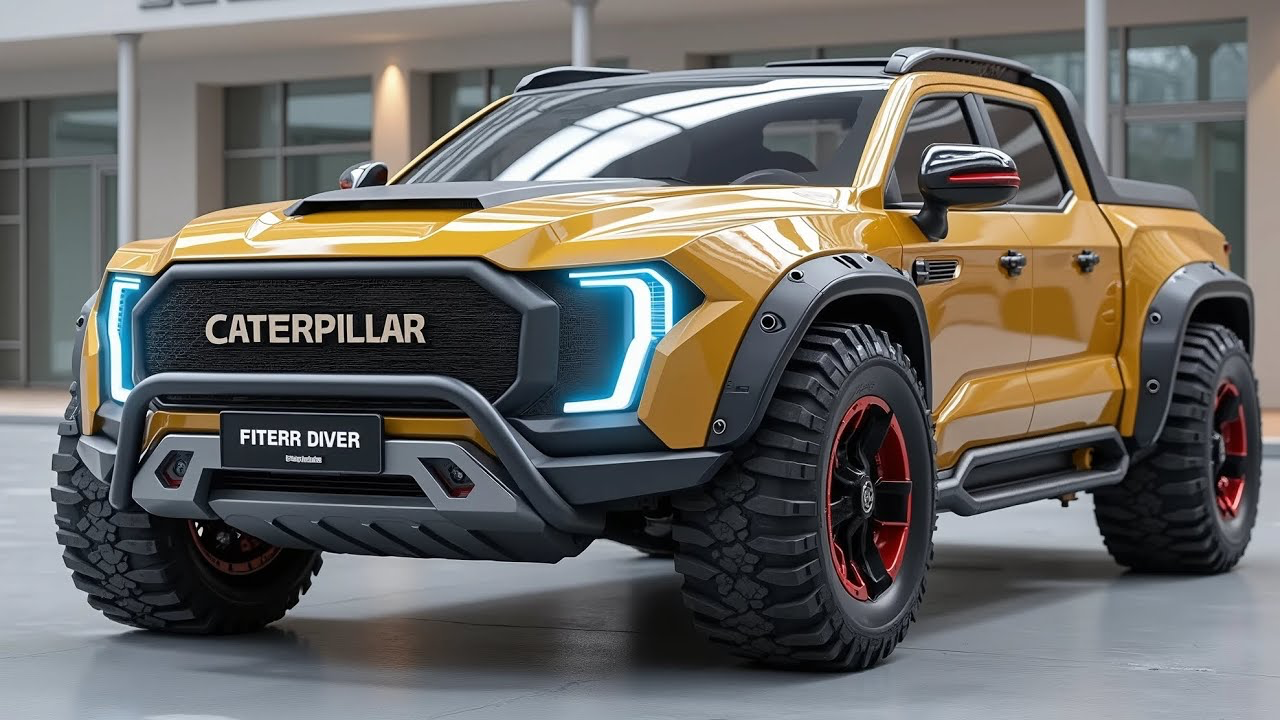
The “2026 Caterpillar Pickup” – A Deep‑Dive into the Viral Hoax
The internet has a habit of turning a clever rendering into a full‑blown legend, and the “2026 Caterpillar Pickup Truck” is a textbook example. Since the first AI‑generated image surfaced in early 2024, the concept has been shared, dissected, and embellished across YouTube, Reddit, and countless Facebook groups. The premise is simple: combine the unmistakable yellow‑and‑black branding of Caterpillar with the size and utility of a full‑size American pickup. The result looks like a machine that could haul a bulldozer onto a job site and still cruise a mountain pass with confidence.
As of the latest check in October 2025, there is no official word from Caterpillar that a production model is in development. The entire story rests on computer‑generated images, speculative specifications, and a price tag that ranges between $85 000 and $120 000. Even though the truck does not exist, the hype is real, and it sheds light on how enthusiasts imagine a vehicle that blends industrial muscle with everyday practicality.

Rugged Exterior and Boxy Proportions
The rendered silhouette is unmistakably a full‑size crew‑cab. Measurements that appear repeatedly in fan‑made diagrams place the length at roughly 250 inches, the width at 80 inches, and the height at 78 inches. A massive grille emblazoned with the leaping cat logo dominates the front, while the headlamps are styled as sharp LED units that seem to cut through fog and dust.
The fender flares are heavily over‑stretched, suggesting a clearance of about 12 inches—enough to clear a pile of rocks or a low‑lying fence. Wheels are shown as 20‑inch alloys wrapped in aggressive 35‑inch, all‑terrain, tubeless tires, giving the truck a stance that would look at home on a construction site or a desert trail. Two paint schemes dominate the conversation: the classic “Cat yellow” with black accents and a low‑key “stealth black” version that would appeal to night‑time operators.

Inside the cargo bed, the render suggests a length of 78 inches and a payload capacity of roughly 2 500 pounds. The tailgate appears to be power‑operated, with a “Pro Access” latch that could unlock and lower automatically—a nod to modern convenience features found on competing pickups.
Interior Layout and Infotainment
If the exterior is meant to turn heads, the interior is designed to keep the driver focused. The cockpit is dominated by a 12‑inch touchscreen that runs a custom Caterpillar OS, supposedly integrating navigation, vehicle diagnostics, and media. Android Auto and Apple CarPlay are listed as wireless options, allowing a seamless connection to a smartphone without cluttering the dash.

Climate control is described as dual‑zone automatic, with heated and ventilated front seats. Rear passengers enjoy a split‑folding bench that can be lowered to expand cargo space. While the render does not show a digital instrument cluster, hobbyists have imagined a fully digital gauge set that displays torque, fuel consumption, and even real‑time load weight—a useful feature for a truck that would allegedly be used on job sites.
Powertrain Fantasies: A 6.7‑L Turbo Diesel V8
The heart of the hoax is a 6.7‑liter turbocharged diesel V8, quoted at 500 horsepower and a massive 1 200 lb‑ft of torque. In theory, the power would be delivered through a 10‑speed automatic transmission paired with a 4‑wheel‑drive system. Enthusiasts claim 0‑60 mph in under 6 seconds and a top speed exceeding 120 mph—numbers that would put the imagined Caterpillar pickup in the same performance bracket as a Ram 2500 “TRX” variant.

A 36‑gallon fuel tank is shown, providing a projected range of 400‑500 miles under mixed driving conditions. The speculation also includes a “quick‑fill” system that could refuel the tank in about three minutes, though no such technology currently exists in production trucks.
Safety, Driver‑Assist, and Camera Suite
Even a fantasy vehicle needs to look credible, and the mock‑up includes a full suite of driver‑assist technologies. A 360‑degree camera system is advertised, with bird’s‑eye views that would aid in tight site maneuvering. The so‑called “Cat Safety” package allegedly bundles adaptive cruise control, lane‑keep assist, automatic emergency braking, and hill‑descent control.

Airbag coverage is imagined at up to seven points, while electronic stability control, anti‑lock brakes with electronic brake‑force distribution, and a trailer‑sway control system would round out the safety features. These specs align with what manufacturers are already offering on premium pickups, lending an air of plausibility to the hoax.
Fuel Economy, Noise, and Practicality
The imagined fuel consumption lands in a fairly wide range—approximately 9‑11 km per litre (about 20‑24 mpg US). This figure reflects the trade‑off between raw torque and efficiency that heavy‑duty diesel engines face. Noise, vibration, and harshness (NVH) levels are said to be “low for a diesel of this size,” hinting at a refined cabin that would mask the roar of a 500‑hp engine.

Practicality, however, is where the concept stumbles. The large size makes city parking a challenge, while the aggressive tire profile could cause wear on paved roads. The fuel tank size, while generous, would still require frequent stops on long trips, especially if the truck is regularly loaded to its 2 500‑pound payload capacity.
Pricing, Availability, and the Reality Check
Because the vehicle does not exist, any price point is purely speculative. The viral posts repeatedly mention a range of $85 000 to $120 000, positioning the imagined pickup between the high‑end Ford Super Duty models and the more expensive Ram “TRX.” No official statement from Caterpillar or a partner automaker backs these numbers.

If a real version ever appeared, most analysts would expect a limited production run, perhaps aimed at niche markets such as construction fleet rentals or heavy‑off‑road enthusiasts. As it stands, the “2026 Caterpillar Pickup” remains a piece of internet folklore—fun to talk about, but not for sale.
Community Reaction: Dreaming vs. Reality
The response across social media has been a mix of awe and skepticism. Over the past year, YouTubers have produced “first‑look” videos that treat the render as a leaked prototype, while forums have traded spreadsheets comparing the phantom specs to those of the Ford F‑250, Ram 2500, and Chevrolet Silverado HD.

Many commenters admit they would love to see a real Cat‑branded truck, citing the brand’s reputation for durability. Others warn that the hoax feeds unrealistic expectations and could mislead potential buyers who are not familiar with the difference between a rendered concept and a production vehicle.
How It Stacks Up Against Real Heavy‑Duty Pickups
When placed beside actual models, the imagined Caterpillar pickup shines in a few fantasy categories—most notably in sheer torque and the bold interior branding. In practice, existing trucks already offer comparable power (the 6.7‑L Cummins in the Ram 2500, for instance) and a far richer set of proven accessories.

The major differentiator would be “Cat‑style” durability, a perception that could be leveraged into a limited‑edition partnership. Until a genuine partnership or a prototype appears, the concept will remain an entertaining what‑if scenario rather than a viable market contender.
Final Verdict
The “2026 Caterpillar Pickup Truck” encapsulates how a well‑made image can spark an entire narrative. It merges the iconic yellow‑and‑black livery with the muscle of a heavy‑duty diesel pickup, offering a tantalizing glimpse of what a genuine Cat‑branded truck could be. Yet, every listed specification, price, and feature lives only in the realm of speculation.

For anyone hunting a real workhorse, the proven options from Ford, Ram, and Chevrolet continue to deliver horsepower, torque, and technology that have been tested on the road and the job site. Until Caterpillar announces an official venture into the pickup market, the best way to enjoy the Cat pickup is to keep sharing the renders, debating the specs, and dreaming of a yellow beast roaring down a dusty backroad.
Frequently Asked Questions
1. Is Caterpillar actually planning to build a pickup truck?
No. As of the latest statements in 2025, Caterpillar has not announced any development of a consumer‑oriented pickup. The images circulating online are computer‑generated and not based on a real prototype.
2. Where do the figures for horsepower and torque come from?
The numbers—500 hp and 1 200 lb‑ft of torque—are part of the viral speculation. They mirror the output of existing heavy‑duty diesel engines but have never been confirmed by Caterpillar or any partner manufacturer.
3. Could a Caterpillar‑branded vehicle be made in partnership with an existing automaker?
It is theoretically possible. Caterpillar already supplies components and diesel engines to other OEMs, so a badge‑engineered pickup could appear in the future, but no concrete plans have been disclosed.
4. Are the interior screenshots real?
The interior visuals are also AI‑generated. They show a plausible layout with a large touchscreen and standard connectivity options, but they do not reflect an actual production interior.
5. How can I avoid being misled by similar hoaxes?
Look for official press releases, verify the source of images (original renders often contain watermarks), and check whether reputable automotive news outlets have reported on the vehicle. When in doubt, assume a compelling image is a concept rather than a confirmed product.
Disclaimer: This article is intended for informational and entertainment purposes only. All specifications, pricing, and feature descriptions regarding the “2026 Caterpillar Pickup Truck” are based on publicly circulated rumors and AI‑generated renders. No official data from Caterpillar or any automotive manufacturer confirms the existence of such a vehicle.