Introduction
The 2026 Tesla Model 3 arrives on the scene with a clear message: electric mobility has moved beyond a niche pursuit and is now the default choice for a growing segment of drivers who want performance, practicality, and a glimpse of the future—all in a single package. While the silhouette remains recognizably “Model 3,” subtle updates under the skin make this year’s edition feel fresh, more refined, and better suited to everyday life. In the sections that follow we’ll walk through every major aspect of the car, from the way it looks to how it drives, and we’ll put it into context with the competition that shares the premium compact‑sedan stage.
What the 2026 Model 3 Is
At its core, the 2026 Model 3 is a fully electric, five‑seat compact sedan built on Tesla’s third‑generation platform. It offers three primary powertrains: a rear‑wheel‑drive (RWD) version that targets efficiency‑focused buyers, a dual‑motor all‑wheel‑drive (AWD) that emphasizes performance, and a new “Performance‑Plus” variant that pushes acceleration while retaining a respectable range. All three share a common chassis, high‑strength aluminum body, and an advanced battery pack located beneath the floor, giving the car a low centre of gravity that benefits handling and stability.
The model continues Tesla’s philosophy of a minimalist interior paired with a massive software‑centric experience. Over‑the‑air updates remain a cornerstone, meaning owners can expect new features, bug fixes, and even performance tweaks without stepping foot in a service centre.
Exterior Design and Aerodynamics
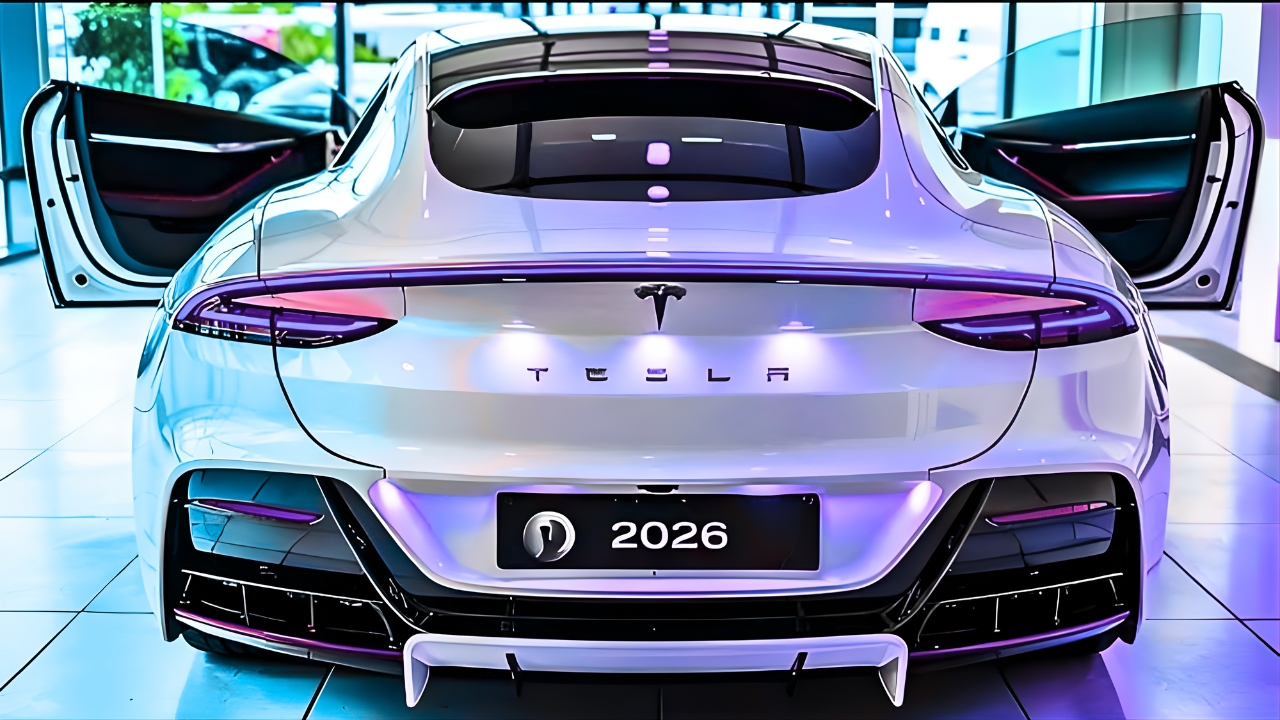
Visually, the 2026 Model 3 refines the clean lines that have defined the vehicle since its debut. The front bumper now sports a slightly wider splitter that subtly directs airflow around the wheel arches, shaving roughly 0.02 Cd off the drag coefficient. The headlights have adopted a slimmer, matrix‑LED architecture, capable of individually controlling light zones for improved night‑time illumination and adaptive high‑beam performance.

Rearward, the taillight cluster has been flattened, giving the car a more modern, almost aircraft‑inspired silhouette. Optional 21‑inch “aero‑spoke” wheels feature a hollow‑tone design that reduces rotational mass while also channeling air through the wheel wells to cool the brakes. An active rear spoiler, previously reserved for the Performance trim, is now offered across the range and deploys automatically at speeds above 55 mph, further enhancing stability and extending range by reducing lift.
Interior Layout and Comfort
Step inside, and the cabin still reads like a high‑tech lounge rather than a conventional automobile interior. The dashboard is dominated by a 15‑inch landscape touchscreen that now runs Tesla’s latest version of the V‑Software platform, delivering smoother animations and a more intuitive layout. Physical controls have been reduced to a single scroll wheel for climate and a momentary power button, reaffirming the brand’s “software‑first” ethos.

Materials have been upgraded to a mix of vegan‑leather upholstery and recycled‑fiber trims, meeting stricter sustainability goals without sacrificing a premium feel. Seat cushions are slightly thicker, and the rear seatbacks now offer a 3‑inch increase in headroom thanks to a modestly raised roofline. An optional panoramic glass roof, now with electrochromic tinting, lets occupants control the amount of sunlight entering the cabin, and a new ambient lighting scheme adds subtle hues that can be synchronized with music or navigation cues.
Technology and Infotainment
Tesla’s infotainment system remains a benchmark in the industry. The 2026 Model 3 now supports 5G connectivity, enabling higher‑resolution streaming and faster data transfers for navigation updates. Integrated Wi‑Fi and a new “Tesla App Pro” allow owners to schedule charging, pre‑condition the cabin, and even set up a “car‑as‑wifi hotspot” for passengers.

The multimedia suite includes support for the latest Android Auto and Apple CarPlay protocols, a first for the brand, giving users access to native smartphone interfaces without compromising the seamless Tesla UI. For entertainment, a revised video player can stream 4K content when the car is parked, while a new “Gaming Mode” unlocks a library of cloud‑based games that can be played with the steering wheel as a controller.
Electric Powertrain and Performance
The three powertrain options share a common 82 kWh lithium‑ion battery pack, now boasting a 10 % increase in energy density due to a new cell chemistry that Tesla calls “4684‑X.” The RWD version delivers 260 hp and 280 lb‑ft of torque, achieving 0‑60 mph in 6.2 seconds. The standard AWD model pushes 350 hp and 400 lb‑ft, hitting 0‑60 mph in 4.5 seconds. The Performance‑Plus edition adds a third motor for an extra 50 hp, totaling 400 hp and 450 lb‑ft, shaving the 0‑60 mph time to 3.6 seconds.
All variants employ a single-speed planetary gear reduction, which simplifies the drivetrain and contributes to the car’s low maintenance profile. Regenerative braking has been fine‑tuned to provide up to 30 % more energy recovery under normal city‑driving conditions, and the steering‑wheel‑mounted paddle shifter now lets drivers toggle between “high‑regen” and “low‑regen” modes on the fly.
Driving Dynamics and Ride Quality
The battery’s floor‑mounted placement keeps the centre of gravity comparable to a sports car, and the adaptive air suspension, now standard on AWD and Performance variants, automatically adjusts damping based on road conditions and driving style. In Comfort mode, the car glides over potholes and uneven surfaces with minimal disturbance. In Sport mode, the suspension stiffens, delivering sharper handling and a more connected feel.

Steering feedback has been enhanced with a new electric power‑assist system that provides a tighter, more precise feel at low speeds while still offering ample assistance for highway cruising. The chassis includes a revised front subframe that reduces noise, vibration, and harshness (NVH), making the cabin noticeably quieter than previous generations, even at highway speeds.
Safety Features and Build Quality
Tesla continues to lead in active and passive safety. The 2026 Model 3 houses eight airbags, reinforced side‑impact beams, and a redesigned front crash structure that uses ultra‑high‑strength steel. The car’s crash test ratings are expected to remain in the 5‑star range across NHTSA and Euro NCAP categories.

Active safety now includes an upgraded “Tesla Vision” system with a new 12‑camera suite that offers 360‑degree coverage. This feeds into an improved Autopilot that can handle lane changes, highway on‑ramps, and traffic‑jam assist without driver input. Full Self‑Driving (FSD) beta, still a paid option, now features “Predictive Navigation,” which anticipates upcoming turns and adjusts speed proactively.
Charging Infrastructure and Range
Supercharging remains Tesla’s competitive edge. The 2026 Model 3 can accept up to 250 kW on V3 Superchargers, adding roughly 200 miles of range in ten minutes. A new “Rapid Charge” mode can temporarily boost charging power to 300 kW on select stations, at the expense of a slightly higher battery temperature that the thermal management system handles automatically.

EPA‑estimated ranges have improved across the board: 267 miles for the RWD, 304 miles for the AWD, and 282 miles for the Performance‑Plus variant. Real‑world tests suggest these numbers hold up well under mixed‑city/highway driving, especially when drivers take advantage of regenerative braking and the vehicle’s aerodynamic wheel options.
Autonomy and Smart Features
Beyond Autopilot, the 2026 Model 3 introduces a “Personalized Driving Profile” that learns individual habits—such as preferred following distance, acceleration style, and climate settings—and applies them automatically when a driver’s key fob is detected. The car can also recognize familiar routes and suggest optimal charging stops based on real‑time traffic and station availability.

Parking assistance has been upgraded to “Smart Park Assist,” allowing the car to autonomously navigate parallel and perpendicular parking spaces using ultrasonic sensors and the surround‑view camera system. For city dwellers, a “Summon‑Lite” function lets the vehicle pull out of tight spots and move a few feet forward or backward under remote control from a smartphone.
Environmental Benefits and Sustainability
Tesla’s commitment to sustainability shows in both the vehicle and its production chain. The 2026 Model 3’s battery pack uses a higher proportion of recycled cobalt and nickel, reducing reliance on newly mined materials. Manufacturing at the Fremont and Shanghai Gigafactories now runs on 100 % renewable energy, and the supply chain for the vegan‑leather interior is certified carbon‑neutral.
When paired with a home solar‑plus‑Powerwall system, owners can charge the vehicle entirely from renewable sources, effectively eliminating tailpipe emissions and lowering household carbon footprints. Tesla also offers a “Battery‑Second‑Life” program, which repurposes used cells for stationary energy storage after they fall below the 80 % capacity threshold for automotive use.
Customization and Options
Customization remains a strong selling point. Buyers can select from six exterior paint finishes, including a new “Midnight Sapphire” metallic that changes hue depending on the angle of light. Wheel options range from 18‑inch “Standard Aero” to 22‑inch “Carbon‑Fiber Hyper‑Sport.” Interior themes include “Eco‑Luxe” (vegan leather, recycled wood trim) and “Tech‑Grey” (metallic accents, carbon‑fiber inserts).
Software upgrades provide additional functionality: a “Premium Connectivity” package adds satellite maps, live traffic, and an in‑car internet browser, while the “Entertainment Bundle” unlocks gaming, streaming, and third‑party music services. For performance enthusiasts, the “Track Pack” enables higher torque limits, launch control, and data logging for use on closed circuits.
Market Position and Competitors
The compact electric sedan segment has become fiercely competitive. Direct rivals such as the Polestar 2, BMW i4, and Lucid Air each bring unique strengths—Polestar’s Scandinavian design, BMW’s driving pedigree, and Lucid’s ultra‑long range. The Model 3 continues to differentiate itself through the breadth of Tesla’s software ecosystem, the density of the Supercharger network, and a price point that undercuts many premium alternatives while still delivering comparable—or superior—performance.
In markets where incentives for zero‑emission vehicles remain strong, the Model 3 often qualifies for the highest rebate tiers, further enhancing its value proposition. Analysts predict that the 2026 iteration will retain its status as the volume leader in the segment, especially as Tesla rolls out incremental hardware upgrades without noticeable price hikes.
Final Verdict
The 2026 Tesla Model 3 feels like a natural evolution rather than a radical redesign, and that is precisely why it works so well. It refines the formula that made the original a bestseller: a sleek, minimalistic package filled with cutting‑edge technology, impressive performance, and a practical range for everyday use. With improvements in aerodynamics, interior comfort, and battery efficiency, combined with an ever‑expanding software feature set, the car remains a compelling choice for anyone looking to transition to electric without sacrificing the excitement of driving. Whether you are a commuter, a tech enthusiast, or a performance‑oriented driver, the 2026 Model 3 delivers a balanced, future‑forward experience that few competitors can match.
Frequently Asked Questions
1. How does the 2026 Model 3’s range compare to the 2025 model?
The 2026 version gains roughly 20–30 miles of EPA‑estimated range across all trims, thanks to a higher‑density battery and refined aerodynamics. The RWD now offers 267 miles, up from 245 miles on the 2025 model.
2. Is the new “Performance‑Plus” variant worth the extra cost?
If sub‑4‑second 0‑60 mph times and the most aggressive handling are priorities, the Performance‑Plus trim justifies its premium price. However, the standard AWD version already provides spirited acceleration (4.5 seconds) and a respectable range, making it a solid all‑rounder.
3. Can I still use the older Supercharger V2 stations with the 2026 Model 3?
Yes. The car is compatible with both V2 (up to 150 kW) and V3 (up to 250 kW) Superchargers. While V3 stations charge faster, V2 locations remain useful, especially in areas where V3 deployment is limited.
4. Does the vehicle support third‑party charging networks?
Tesla has opened its charging port to CCS adapters in several regions, allowing access to non‑Tesla DC fast‑charging stations. An optional CCS adapter kit can be purchased directly from Tesla.
5. What are the warranty terms for the battery and drivetrain?
Tesla continues to offer an 8‑year or 120,000 mile (whichever comes first) warranty on the battery pack, with a minimum 70 % retention of capacity over that period. The powertrain and chassis are covered for 4 years or 50,000 miles.
Disclaimer
The information presented here is based on publicly released specifications, official Tesla communications, and independent testing up to the publication date. Specifications, pricing, availability, and feature sets are subject to change without notice. Prospective buyers should verify details with an authorized Tesla dealer or the company’s website before making a purchase decision.