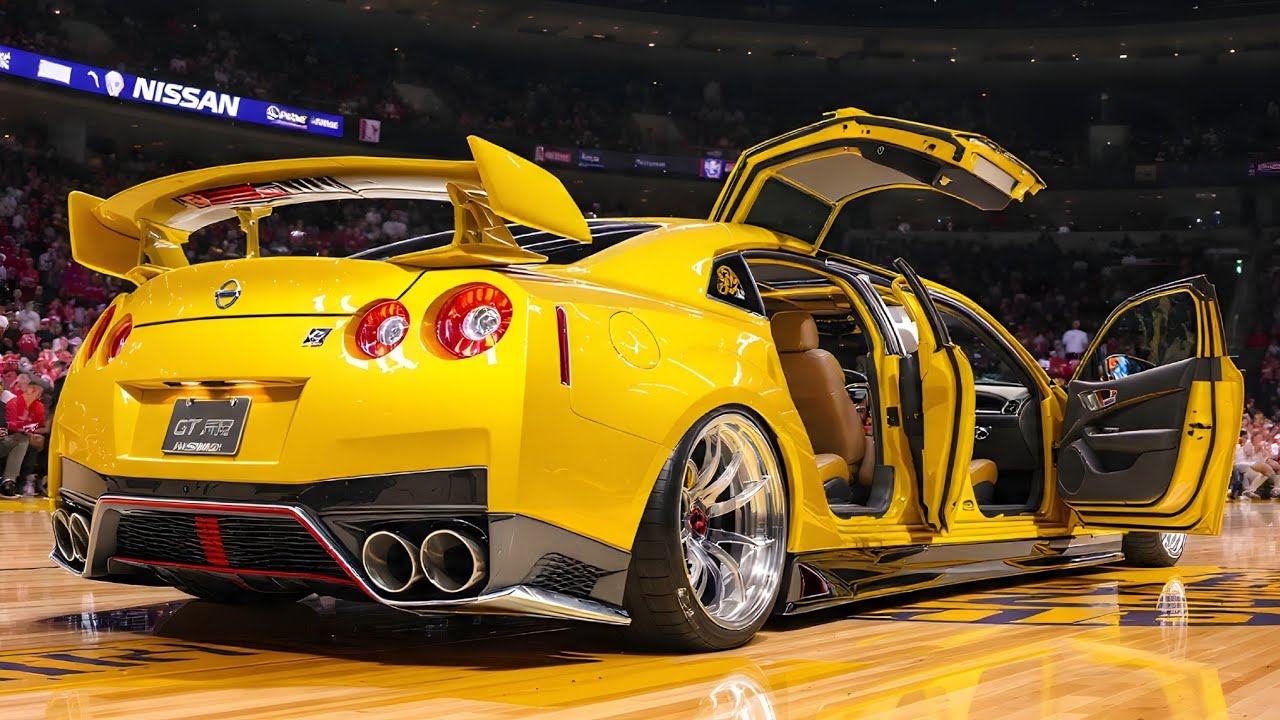
A New Chapter for Godzilla: Inside the 2026 Nissan GT‑R R36 Nismo Concept
The name “Godzilla” has long been synonymous with raw, unfiltered performance, and the R35 GT‑R turned that legend into a modern street‑legal monster. As the automotive industry shifts toward electrified powertrains, Nissan is poised to rewrite the story once more. The 2026 Nissan GT‑R R36 Nismo Concept is not simply a replacement; it is a reinterpretation that fuses the iconic spirit of the GT‑R with cutting‑edge hybrid technology. For anyone who has cheered the R35’s roar on the track or imagined a future where a Godzilla could run on electricity, the R36 arrives as a promise that the past and the future can coexist in a single, ferocious machine.
What the R36 Nismo Concept Is and Why It Matters
At its core, the R36 Nismo Concept is Nissan’s answer to the inevitable electrification of the supercar segment. While many manufacturers are experimenting with fully electric hypercars, Nissan is opting for a high‑performance hybrid that retains a gasoline V6—now twin‑turboed—paired with an electric motor capable of delivering instant torque. This combination aims to produce nearly 900 horsepower, a figure that would place the R36 at the summit of the 2026 performance hierarchy.
The significance of this approach is twofold. First, it demonstrates that a manufacturer can honor a legacy model’s character while embracing the sustainability demands of today’s market. Second, the hybrid solution sidesteps the current limitations of battery density and electric‑only range, preserving the visceral driving experience that GT‑R devotees cherish. In short, the R36 could become a benchmark for how heritage supercars transition into the electrified era without losing their soul.
When and Where the R36 Might Appear
Industry chatter suggests that Nissan plans to unveil a near‑production version of the R36 at the Tokyo Motor Show in late 2025, followed by a debut at the North American International Auto Show in Detroit early the next year. If the development timeline stays on track, limited‑run production could begin in the first half of 2026, targeting key markets in Japan, the United States, and select European countries.

Because the GT‑R has always been a low‑volume, high‑demand vehicle, Nissan is expected to keep production numbers modest—likely under 3,000 units worldwide. Early pricing hints point to a sticker price in the US market between $200,000 and $250,000, depending on configuration and optional performance packages. As with previous GT‑R releases, the first batch of customers will likely be secured through an online reservation system, with deposits required to lock in a build slot.
How the Hybrid Powertrain Works – A Simple Overview
The heart of the R36 is a twin‑turbo V6 that produces roughly 600 horsepower on its own. Nestled alongside the engine is a high‑output electric motor delivering an additional 300 horsepower and a massive surge of torque available from zero RPM. The two power sources are linked through a sophisticated energy‑management system that decides in real time which combination provides the best performance, efficiency, or emissions profile.

Key aspects of the system include:
- Electric Torque Fill – When the driver lifts off the throttle, the electric motor instantly supplies torque, eliminating the turbo lag that traditionally plagues forced‑induction engines.
- Regenerative Braking – Energy normally lost as heat during braking is captured and stored in a compact lithium‑ion battery pack, extending the electric‑only range for low‑speed city driving.
- Hybrid‑Mode Selector – Drivers can choose between “Pure Electric,” “Performance Hybrid,” and “Eco” modes, allowing the car to adapt to different driving environments without sacrificing the GT‑R’s signature aggression.
The result is a vehicle that can sprint from 0‑60 mph in under two seconds while still offering a respectable electric‑only range of roughly 15 miles for daily commutes.

Design Language: Aggression Meets Aerodynamics
Visually, the R36 leans heavily into aerodynamic efficiency without abandoning the muscular silhouette that defines the GT‑R lineage. The front fascia features a slimmer, adaptive grille that opens when cooling demand spikes and closes at higher speeds to reduce drag. Wide, vented fenders accommodate larger wheels—19‑inch forged aluminum at the front and 20‑inch at the rear—while also aiding airflow to the brakes and the turbochargers.
A standout element is the active rear wing, which extends automatically at high speeds to generate downforce and retracts on the highway to lower the drag coefficient. Carbon‑fiber panels are employed extensively, not just for weight savings but also to sculpt the airflow around the car, channeling it toward the rear diffuser for maximum stability at 200 mph+.

Inside, the cockpit is driver‑centric, with a digital instrument cluster that can display either traditional tachometer and speed readouts or a hybrid energy flow diagram, depending on the driver’s preference. The steering wheel houses tactile paddle shifters, a small display for hybrid mode status, and an optional haptic feedback system that vibrates to warn of traction loss or battery limits.
Why the R36 Could Change the Future of Supercars
The R36 sits at a crossroads where performance expectations intersect with environmental pressures. Should Nissan successfully deliver a hybrid supercar that feels as raw and exhilarating as its gasoline‑only ancestors, it will prove that electrification need not mute a car’s emotional appeal. This could set a precedent for other legacy manufacturers—Ferrari, Porsche, and Lamborghini among them—to adopt similar hybrid architectures while preserving their brand identities.

Moreover, the R36’s approach to acoustic engineering—using an “acoustic exhaust” that amplifies engine note without compromising emissions—offers a template for making electric‑assisted performance cars sound thrilling instead of silent. If the market embraces this balance, we may see a new class of “hybrid hypercars” that dominate the top tier of automotive performance for the next decade.
Features That Define the R36 Nismo Concept
- Active Aerodynamic Wing – Adjusts automatically for downforce or drag reduction.
- Hybrid Power Boost – Provides instant torque from the electric motor, eliminating turbo lag.
- Ceramic‑Composite Braking System – Delivers consistent stopping power under repeated hard braking.
- AI‑Assisted Telemetry – Collects real‑time performance data and suggests driver‑specific tuning.
- Driver‑Adjustable Suspension – Offers multiple modes from comfort to track‑focused rigidity.
- Carbon‑Fiber Monocoque – Enhances torsional rigidity while keeping overall weight low.
- Acoustic Exhaust Tuning – Generates a signature roar that can be tailored via software.
Each of these elements works together to create a car that feels both modern and unmistakably GT‑R.

Challenges and Nissan’s Solutions
Hybrid supercars face a unique set of engineering hurdles, the most prominent being heat management, weight control, and preserving driver engagement. Nissan addresses heat with a dual‑circuit cooling system: one loop handles the combustion engine and turbochargers, while a second, high‑flow loop cools the electric motor and battery pack. Heat exchangers are placed in strategic air ducts around the body to maximize dissipation without adding drag.
Weight is mitigated through extensive use of carbon‑fiber-reinforced polymer (CFRP) for the chassis and body panels, as well as a compact battery pack designed specifically for performance rather than long‑range travel. The total curb weight targets roughly 1,850 kg, a figure comparable to the R35 despite the added hybrid components.

Finally, to keep the driver emotionally connected, Nissan has incorporated a “sound‑generation” system that amplifies select engine frequencies inside the cabin and through a specially tuned exhaust. The electric motor’s whine is also customizable, allowing owners to choose a more aggressive or subtle audio profile.
Industry Reaction and Recent Developments
Since the first renderings leaked early 2024, the R36 has sparked a flurry of commentary on automotive forums, social media, and in professional press. Many journalists praise Nissan’s decision to pursue a hybrid rather than a fully electric platform, noting that the approach preserves the GT‑R’s identity while future‑proofing the model.

Recent updates from Nissan’s chief engineer indicate that a functional prototype is already undergoing dyno testing, with peak power numbers consistently hitting the 880‑900 hp target. The automaker also announced an upcoming partnership with a leading battery technology firm to develop a high‑density, fast‑charging pack specifically for the R36, promising a 0‑80 % charge in under ten minutes.
Conclusion: The R36 as the Next Iconic Godzilla
The 2026 Nissan GT‑R R36 Nismo Concept represents a bold evolution of a legend. By marrying a twin‑turbo V6 with a powerful electric motor, Nissan aims to deliver near‑instantaneous acceleration, track‑ready handling, and a distinctive acoustic character—all while meeting stricter emissions standards. Its aggressive aerodynamics, lightweight carbon construction, and suite of performance‑focused technologies suggest that the R36 could become the benchmark for hybrid supercars in the coming years.
If Nissan’s vision materializes as promised, the new GT‑R will not merely be a successor; it will be a statement that heritage and innovation can coexist, proving that the Godzilla spirit is alive, louder, and more electrified than ever before.
Frequently Asked Questions
1. Will the R36 be available with a purely electric powertrain?
At launch, Nissan plans to offer only the hybrid configuration. However, the company has hinted at the possibility of an all‑electric GT‑R variant in a later generation, once battery technology advances further.
2. How many units of the R36 does Nissan intend to produce?
Production is expected to be limited, likely under 3,000 units worldwide, mirroring the low‑volume strategy of previous GT‑R models to maintain exclusivity.
3. What is the expected fuel economy for the hybrid system?
Nissan targets a combined fuel economy of roughly 22‑24 mpg, a notable improvement over the R35’s figure, thanks to electric assist and regenerative braking.
4. Can owners customize the sound of the exhaust and electric motor?
Yes. The R36’s software suite includes a “Sound Tuning” module that lets drivers select from several acoustic profiles for both the exhaust and the electric motor’s whine.
5. When will the R36 be eligible for Nismo’s motorsport season?
Nissan has announced that a race‑spec version of the R36 will be ready for the 2027 GT‑R Challenge series, with a dedicated Nismo team handling development and support.
Disclaimer
The information presented in this article is based on publicly available data, manufacturer statements, and reputable automotive news sources up to the date of publication. Specifications, pricing, and availability are subject to change without notice. Readers should verify details with official Nissan channels before making any purchase decisions.